This is the fourth part of our series (I, II, III) looking at how Carthage's complex, multi-ethnic armies were raised and structured. Last week, we looked at Carthage's unusual system for raising vassal forces: long-serving Carthaginian generals could inhabit positions within the personalist, non-state mobilization systems of Numidia and Iberia, enabling them to access military … Continue reading Collections: Raising Carthaginian Armies, Part IV: Allies and Mercenaries
Category: Collections
Collections: Raising Carthaginian Armies, Part III: Generals, Warlords and Vassals
This is the third part (I, II) of our series looking at how Carthage's complex, multipart armies were raised and constituted. Last time, we looked at the backbone of Carthage's armies: North African troops levied out of Carthage's subject communities in North Africa. These fellows seem to have been directly employed by the Carthaginian state, … Continue reading Collections: Raising Carthaginian Armies, Part III: Generals, Warlords and Vassals
Collections: Raising Carthaginian Armies, Part II: The African Backbone
This is the second part (I) of our series looking at the structure of the Carthaginian army. As we discussed last time, while Carthage has an unfair reputation for being an 'un-military' society, its military system was one of the highest performing in the ancient Mediterranean, able to produce vast and effective armies waging war … Continue reading Collections: Raising Carthaginian Armies, Part II: The African Backbone
Collections: Raising Carthaginian Armies, Part I: Finding Carthaginians
This is the first part of a series looking at the structure of the Carthaginian army. Although Carthage has an (unfair!) reputation for being a country of "peaceful merchants who tended to avoid wars," Carthage was, I will argue, without question the second greatest military power the Mediterranean produced - eclipsed only by Rome. If … Continue reading Collections: Raising Carthaginian Armies, Part I: Finding Carthaginians
Collections: Reconstructing the Roman Pectoral
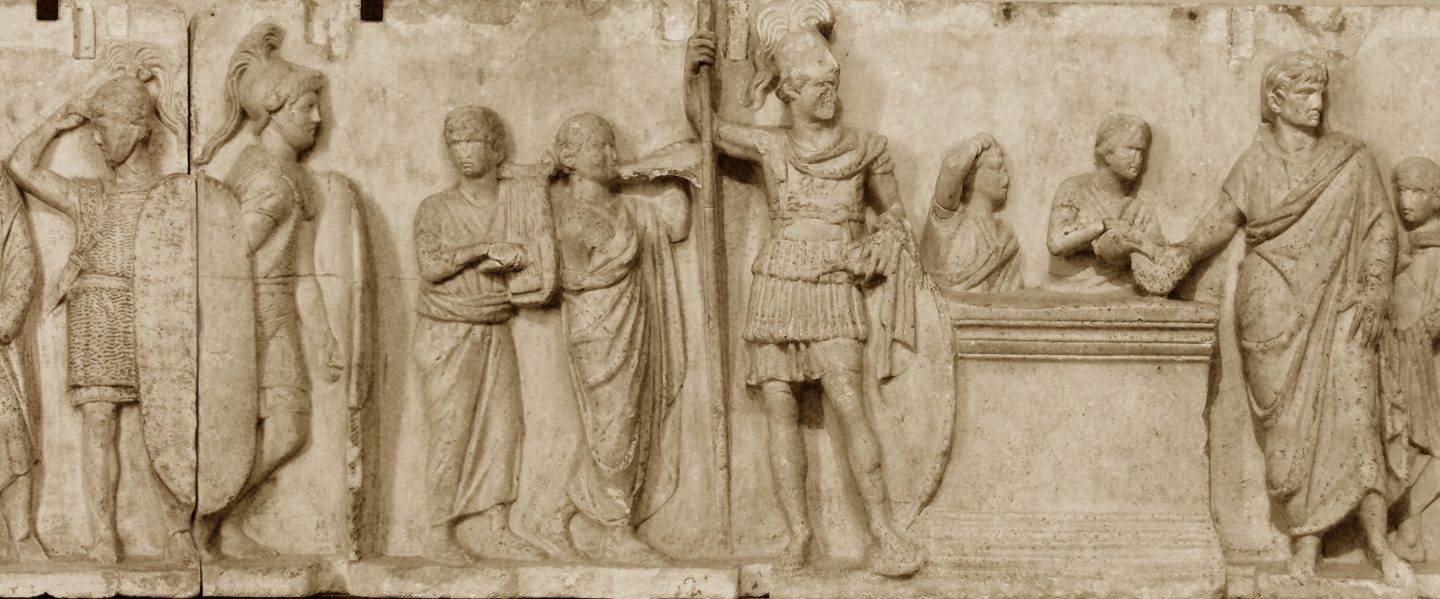
This week we're going to look a specific piece of early Roman military equipment, the humble bronze pectoral, which it turns out is surprisingly tricky for us to confidently reconstruct, in part because the period of its use that most interests us (the run from c. 264 to c. 146 where Rome is winning its … Continue reading Collections: Reconstructing the Roman Pectoral
Collections: Warfare in Dune, Part II: The Fremen Jihad
This is the second part (I, II) of our somewhat silly look about the plausibility of warfare in Frank Herbert's Dune. Last week, we looked at the system of warfare that is dominant in the setting when the first book opens: warfare among the Great Houses. While I noted some worldbuilding issues I see - … Continue reading Collections: Warfare in Dune, Part II: The Fremen Jihad
Collections: Warfare in Dune, Part I: Fighting Faufreluches
This week, time for something a bit silly: we're going to think about the plausibility of the warfare in Frank Herbert's Dune! In particular, I want to approach the question in two parts (I, II) : first asking if the model of warfare among the Great Houses we're introduced to in the first book of … Continue reading Collections: Warfare in Dune, Part I: Fighting Faufreluches
Collections: Ancient Mediterranean Mercenaries!
This week we're going to take a look at mercenaries in the ancient Mediterranean world! This was one of the runners-up in the latest ACOUP Senate poll, coming out of quite a few requests to discuss how mercenaries functioned in antiquity. In order to keep the scope here manageable and within my expertise, I am … Continue reading Collections: Ancient Mediterranean Mercenaries!
Collections: Against the State – A Primer on Terrorism, Insurgency and Protest
This week, continuing in the vein of some of our previous strategy and military theory primers, I wanted to off a basic 101-level survey of the strategic theory behind efforts, in a sense, directed against the state itself, both violent approaches (what we might call 'terroristic insurgency') and non-violent approaches (protest). It may seem strange … Continue reading Collections: Against the State – A Primer on Terrorism, Insurgency and Protest
Collections: The Late Bronze Age Collapse, A Very Brief Introduction
This week, by order of the ACOUP Senate, we're talking about the Late Bronze Age Collapse (commonly abbreviated 'LBAC'), the shocking collapse of the Late Bronze Age state system across the Eastern Mediterranean and Middle East during the 12th century (that is, the 1100s) BC. In the broader Mediterranean world, the Late Bronze Age Collapse … Continue reading Collections: The Late Bronze Age Collapse, A Very Brief Introduction