Collections: The Siege of Eregion, Part IV: What Siege Equipment?

This is the fourth part of our [five? -ish? I, II, III] part series on the Siege of Eregion in Amazon's Rings of Power. Last week, we took the opportunity presented by Adar's absurd plan to dam a river using catapults to collapse a mountain to discuss the capabilities and functioning principles of historical counterweight … Continue reading Collections: The Siege of Eregion, Part IV: What Siege Equipment?

Collections: Coinage and the Tyranny of Fantasy ‘Gold’

This week on the blog I want to take a brief detour into discussing historical coinage, particularly in the context of modern fantasy and roleplaying settings. In particular, the notions I want to tackle are first how did ancient currency systems work in terms of value (what could you buy with how much) and then … Continue reading Collections: Coinage and the Tyranny of Fantasy ‘Gold’

Fireside Friday, February 2, 2024 (On City Building Games)

Fireside this week! I have just finished up a draft of a chapter (to be in one of those multi-multi-author companion volumes) on how video games (particularly more abstract simulation games) depict the ancient world. Writing that chapter led me to reengage with ancient city builders, particularly Caesar IV, Children of the Nile, Pharaoh: A New Era … Continue reading Fireside Friday, February 2, 2024 (On City Building Games)

Collections: Shield Walls and Spacing: Hollywood Mobs and Ancient Tactics

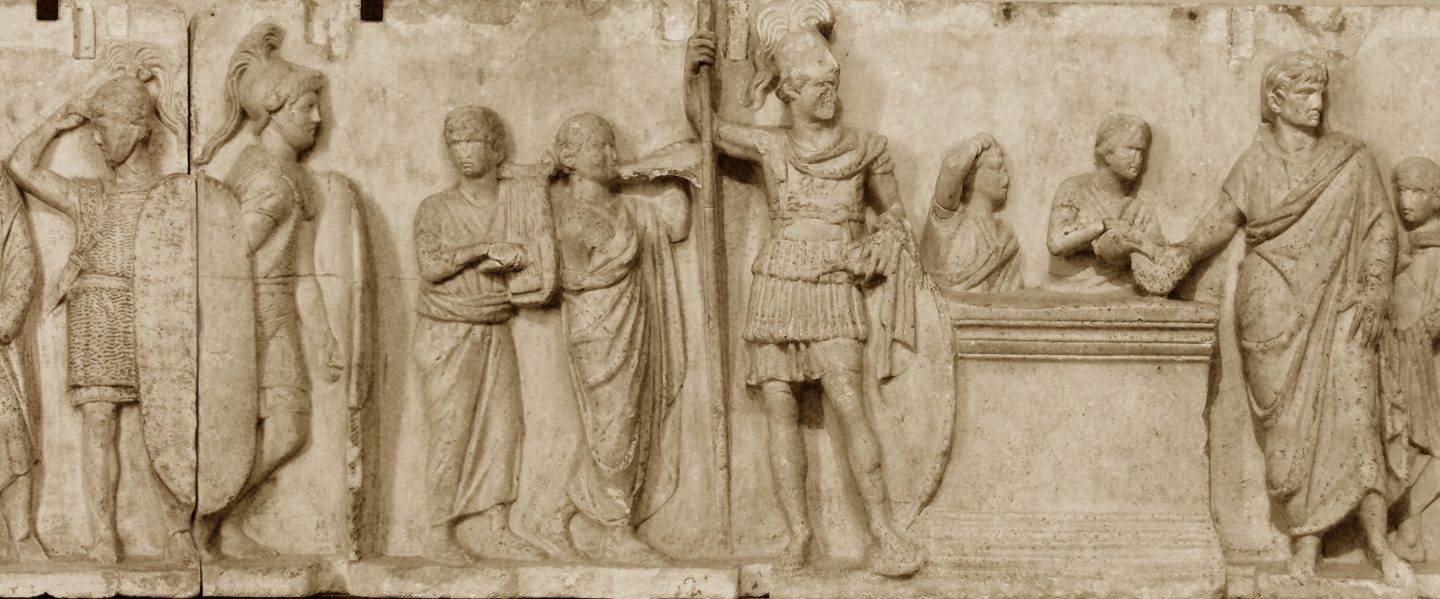
This week, we're going to take a look at a different aspect of ancient infantry tactics: how heavy infantry shield formations work. While I've framed this around 'shield walls,' not every kind of shielded heavy infantry fought that way and in practice the line between what is a 'shield wall' and what isn't comes down to … Continue reading Collections: Shield Walls and Spacing: Hollywood Mobs and Ancient Tactics

Collections: The Gap in the Armor of Baldur’s Gate and 5e

This week we're taking a bit of a detour to critique some video-game armor, in this case the armor of Baldur's Gate III. I have been meaning to do a general critique of the Dungeons and Dragons 5th edition armor system from a historical perspective for a while, and the massive outsized success of BG3 … Continue reading Collections: The Gap in the Armor of Baldur’s Gate and 5e

Collections: Why Rings of Power’s Middle Earth Feels Flat

This week we're going to take a look at the worldbuilding of Amazon Studio's Rings of Power from a historical realism perspective. I think it is no great secret that Rings of Power broadly failed to live up to expectations and left a lot of audiences disappointed. In the aftermath of that disappointment, once one … Continue reading Collections: Why Rings of Power’s Middle Earth Feels Flat

Meet a Historian: James Baillie on Digital Humanities and the Medieval Caucasus

Note from the Editor: I'm excited to feature another guest post with you all! This week we have James Baillie discussing how digital humanities and prosopographic methods can be used to better understand the history of the medieval Caucasus. Prosopography is a historical tool-set that is about charting the networks, connections and commonalities of people, … Continue reading Meet a Historian: James Baillie on Digital Humanities and the Medieval Caucasus

Collections: Teaching Paradox, Crusader Kings III, Part IV: Emperors, Soldiers and Peasants

This is the last part of a four part series (I, IIa, IIb, III, IV) examining the historical assumptions behind the popular medieval grand strategy game Crusader Kings III, made by Paradox Interactive. In the previous sections, we'd laid out what CKIII does very well: building a simulated model (albeit a simplified one) of power … Continue reading Collections: Teaching Paradox, Crusader Kings III, Part IV: Emperors, Soldiers and Peasants

Collections: Teaching Paradox, Crusader Kings III, Part III: Constructivisting a Kingdom

This is the third part of a four part series (I, IIa, IIb, III, IV) examining the historical assumptions behind the popular medieval grand strategy game Crusader Kings III, made by Paradox Interactive. In the last part (in two sections), we discussed how CKIII attempts to model decentralized political power in the fragmented polities of … Continue reading Collections: Teaching Paradox, Crusader Kings III, Part III: Constructivisting a Kingdom